






 Loading tweets...


Migrant jobs at risk from AI – analysis
Migrants in Australia are among the most vulnerable to losing their jobs to the roll out of Artificial Intelligence (AI) technology, a new analysis has found.
 An AI Industry Impact Analysis and literature review by economist Dr Ian Pringle has found that jobs taken up by large numbers of migrants are among the most at risk of being replaced by AI tools.
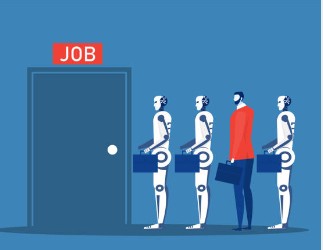
The analysis, commissioned by migrant and refugee settlement agency AMES Australia, found early-stage migrants are heavily concentrated in entry-level, repetitive, or task-oriented roles, and face a disproportionate risk of displacement by Generative AI and automated robotic systems.
The analysis indicates this could be exacerbated by the fact a significant portion of migrants remain trapped in the entry-level tier jobs due to “skills atrophy”: the loss of professional capabilities due to prolonged under-utilisation.
Among the industries in which migrant jobs will be most at risk are retail and hospitality, transport and logistics and finance and administration.
Among industries facing a medium-to-high risk of job losses due to AI are education and training, agriculture and construction.
In retail and hospitality, among the jobs most at risk are checkout operators, fast food attendants, shelf stackers and baristas. Work vulnerable to AI includes order taking, inventory prediction, checkout billing and customer inquiries.
Over the next 2 to 5 years, it is expected advanced kiosks, predictive stock software, and generative customer care bots will become more common. In transport and logistics, among the jobs most at risk are rideshare drivers, warehouse pickers and delivery drivers.
 Warehouse automation is already being implemented and autonomous rideshare fleets are progressing steadily.
In finance and administration, among the jobs most at risk are bookkeepers, data entry clerks and customer service agents. Already large language models (LLM) can seamlessly ingest invoices, cross-check ledgers and automate complex compliance mapping.
The analysis found that jobs in the healthcare sector had the lowest risk of disappearing because of AI. In healthcare, AI acts as an augmenter and efficiency driver rather than a tool of mass displacement.
However, tasks within entry level roles will see significant shifts. The analysis identified several strategies to mitigate the risk of AI driven unemployment. These included accelerating qualifications and experience recognition, AI-resilient upskilling pathways and corporate incentives for inclusive hiring.
One example was bridging programs such as subsidised, short, fast-tracked ‘Australian context’ micro-credentials.
Another was standardised skills passports that align overseas experience and training with Australian equivalents.
The analysis shows job losses in transport and logistics across Australia over the next five years could be between 55,000 and 70,000 jobs, with 35 to 4- per cent of them among migrants.
It shows job losses in hospitality and retail over the next five years could be between 80,000 and 100,000, with 30 per cent of them among migrants.
The analysis shows between 35,000 and 45,000 jobs could be lost in the agriculture and construction sector, with 35 per cent of them among migrants.
AMES Australia Employment Mentor Fayaz Niamati say AI is already having an impact on migrant jobseekers,
“We are seeing the effect of AI every day. There isa warehouse near here where we used to refer employment clients to jobs. But automation means many of these jobs no longer exist,” said Fayaz, who works with people seeking to start careers in Australia.
“AI is particularly affecting young people with automation be ramped up in factories and fast-food drive throughs being manned by robots,” he said.
Ukrainian migrant Svitlana Yaskiv, who teaches English to international students, said many students were fearful of what their future job prospects might be.
“I have English students who are IT specialists who are worried about their jobs and what they will be doing in five years. We can see that migrants are more vulnerable to losing their jobs to AI,” Svitlana said.
“A lot of the entry level and repetitive jobs that migrants often find themselves in after they first arrive, will be lost to AI.
“I think education is the key. People need to train and equip themselves for jobs that won’t be taken by robots,” she said.
Economist Dr Ian Pringle said there was a need to develop strategies to mitigate the effect of AI on jobs.
“The full effect that AI will have on jobs is still an uncertain equation. But it is clear that some sectors will be particularly negatively impacted and many of these are populated by migrants,” Dr Pringle said.
“We need to develop strategies to mitigate the effect of this; and not just for migrants but for all Australians,” he said.
The analysis comes as new reports say almost every taxi ride in an Australian capital city will be driverless within a decade.
The cars steer themselves through traffic using cameras and spinning laser sensors that build a live picture of the road, checked against high-definition maps of the streets they are allowed to use, according to Kentley Klay, a Melbourne designer who created the world’s first purpose-built robotaxi.