

 Loading tweets...


Migrants, refugees embrace Australia Day, survey finds
A large majority of migrants and refugees new to Australia plan to become citizens and believe it is important to celebrate Australia Day, according to a new survey.
Most newcomers plan to mark the day in some way and that Australia Day events make them feel more welcome in their new country, the survey found.
There is also growing awareness among migrants and refugees about the debate over the date of Australia Day and claims by Indigenous groups that it represents an invasion, based on surveys conducted in previous years.
However, most don’t know the significance of the January 26 date and are unaware of sensitivities over the day among some Indigenous Australians.
 The survey of 120 new migrants and refugees, commissioned by refugee and migrant settlement agency AMES Australia, also found an appetite for more information about Australia’s history among recent arrivals.
The survey asked: ‘Is a national day such as Australia Day important for the nation?’ Seventy-nine per cent of respondents said ‘yes’ while just 10 per cent said ‘no’.
Almost 75 per cent said they planned to mark or celebrate the day in some way while 17 per cent said they had no plans.
Only 40 per cent of those surveyed knew the significance on January 26 – the day the First Fleet arrived in Port Jackson – while almost 60 per cent did not.
An overwhelming 87 per cent of respondents said they planned to become Australian citizens while 13 per cent said they had no plans to become citizens or were not sure.
Forty-two per cent of those surveyed were aware of the controversy over Australia Day prompted by some Indigenous groups calling it ‘invasion day’ – up from just 37 per cent in 2024.
Respondents who were aware of the controversy were split evenly over the issue of changing the date with 40 per cent supporting a change and 30 per cent opting for the status quo. Another 30 per cent did not have a view.
Most respondents (78 per cent) said Australia Day would mean more to them it they were citizens while 22 per cent said it would make no difference. The affirmative vote was up from 61 per cent in 2024.
Seventy-five per cent of respondents said they knew, or planned to learn more, about Australia’s history and the reasons Australia Day is celebrated.
The survey found Australia Day events and the tone of publicity around the day helped new arrivals feel welcome.
Three quarters said the day helped them to feel more welcome while 17 per cent said it made no difference and 7 per cent said it made them feel less welcome.
Almost three-quarters (78 per cent) said Australians should be proud of Australia Day, up from 55 per cent in 2024.
But 90 per cent said that, relative to other issues in their lives, the date of Australia day was not important to them.
AMES Australia CEO Melinda Collinson said the survey results showed that migrants and refugees were overwhelmingly committed to becoming Australians and contributing to the nation.
“It’s our experience that almost without exception people who are newly arrived to Australia want to fit in and become part of the broader society,” Ms Colinson said.
“They want to learn about Australia’s culture and history, and they want to build connections,” she said.
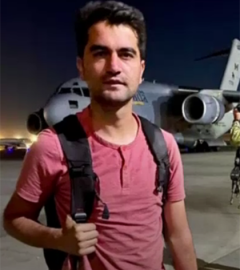
Jalal Ahmadzai, an Afghan refugee who recently became an Australian citizen, said becoming a citizen was a way of showing commitment to his adopted country.
“My life now revolves around this country, so I wanted to show that I am committed,” Jalal said.
“As I citizen, I get to vote and have a say in the way the country is run – which is important to me,” he said.
“For many refugees and migrants who are new to Australia, Australia Day is a monumental occasion to learn about the history of the country they call home and integrate into their new societies. But it is crucial that we acknowledge the losses of those who have experienced the pain of colonisation.”
“It is a chance to reflect on the journey my family has been on and to express gratitude for the opportunities we now have,” Jalal said.