


 Loading tweets...


Most people support refugee protection – global survey
Two thirds of people in a new global survey back the idea of providing refuge and protection to those fleeing war or persecution.
Support for refugees in 29 countries remains high in spite of drastically reduced numbers of global resettlement places, and even in countries where governments have restricted refugee intakes, such as the United States.
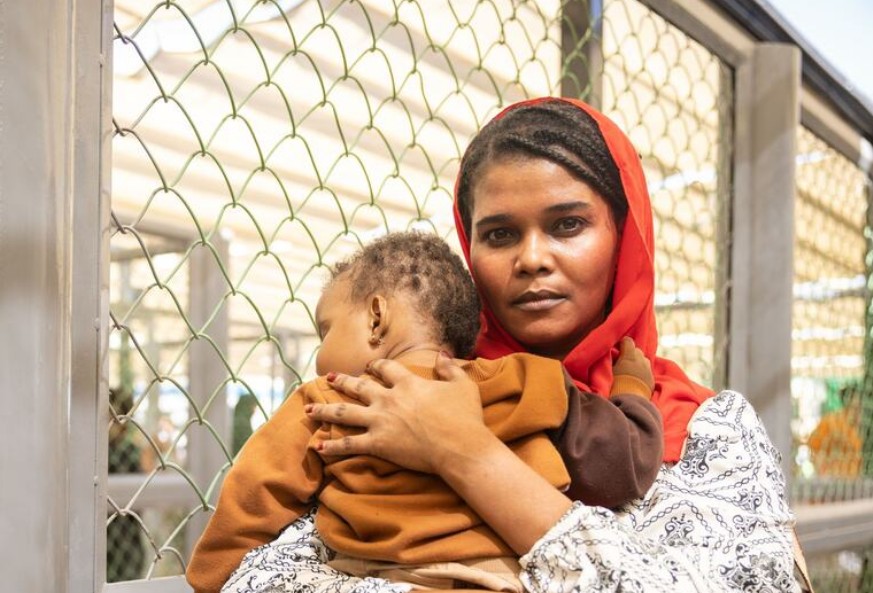 The Ipsos poll comes amid near record displacement levels with around 117 million people across the globe forced to flee their homes.
The survey of more than 20,000 adults across 29 countries, commissioned by the UN refugee agency UNHCR, showed that two-thirds of respondents agreed that people in danger should have the option to seek refuge in another country.
In the US, 72 per cent of respondents supported refugee protections and Gen Z participants were more upbeat on refugee integration than older generations, the survey found.
Australia was among the nations found to be most positive about the benefits of refugee integration.
The figures are virtually unchanged from last year and some countries like Japan and France even showed hikes in support for refugees.
UNHCR said the findings were positive in the face of polarisation and divisive debates about migration in many nations.
“Even despite all of the background noise and the polarisation in the world at the moment, generally support for the institution of refuge and asylum is holding up and we think that that’s quite a positive thing to say in the current environment,” UNHCR spokesman Matthew Saltmarsh said.
In the US, where the Trump administration froze refugee admissions from around the world when it came to office in January 2025, 72 per of respondents backed refugee protections.
The survey also showed that younger people were more positive on refugees than older ones, with almost half of Gen Z respondents voicing hope that refugees would integrate versus 39 per cent of Baby Boomers.
However, many of those surveyed, or around 61 per cent, also voiced doubts about the validity of some asylum claims, with this view often being voiced by those who also support protecting refugees, the survey showed.
“What we see is a tension between people wanting to support those in desperate need at the same time as having doubts about whether the system is working as it should,” Ipsos spokesman Trinh Tu said.
UNHCR said that despite a growing volume of fake news and hate speech about asylum seekers, public support for refugees is stronger than public debate often suggests.
UNHCR’s Director of External Relations Dominique Hyde said this perspective is prevalent in the UK, where “we’ve got the lowest net migration in Britain, but at the same time, half of the population thinks that actually immigration has gone mad, even though the facts show otherwise”.
In Germany and Sweden, where refugee intake is quite sizeable, that support for asylum seekers remains relatively strong. In Türkiye and Poland, support is not as strong as in previous years, she said.
Ms Hyde said there was a need for continued international support for asylum seekers, citing the difficulties many countries face trying to host tens of thousands of people fleeing conflict.
“Generosity cannot replace this international responsibility,” Ms. Hyde said.
The survey indicated that support for refugees is strongest in Sweden and the Netherlands (78 per cent), followed by Spain (76 per cent). Australia, Brazil and the United States expressed the most positive views on the benefits of refugee integration.
Some countries showed distinct shifts over time, including in Japan, where support for people seeking refuge rose to 64 per cent from 23 per cent in 2019, and in France, where it has climbed to 68 per cent from 43 per cent over the same period.
When asked about specific displacement situations and how they would prefer to respond, people prioritized direct emergency assistance, alongside diplomatic action and temporary protection.
The findings suggest that many people believe that refugee protection should include more alternatives than resettlement, although this remains a vital protection pathway for the most vulnerable refugees.
“What we know is that many people support the right to seek safety while also questioning whether asylum systems are fair, efficient, and properly managed. This is an important message for the 75th anniversary of the 1951 Refugee Convention. Seventy-five years on, the challenge is not only to defend the Convention, but also to make sure that the promise works,” Ms Hyde said.
Legal protections for refugees were enshrined in the 1951 Refugee Convention, drafted in the aftermath of World War Two, which displaced tens of millions of people.
But near record levels of displacement around the world, due partly to long-running conflicts like Ukraine or Sudan or Sudan have prompted some governments, including once welcoming ones, to tighten border controls.
In 2025, conflicts, violence and persecution continued to force millions of people from their homes, while climate shocks, economic instability and political fragility deepened needs.
UNHCR aimed to protect and assist 129.4 million people, close to 2024 levels. At the same time, available resources fell by $1.2 billion to $3.9 billion.
This meant UNHCR was forced to respond to almost the same level of need with resources last seen in 2016, when the global population of forcibly displaced and stateless people was less than half its current size.
The report at a glance
Support remains stable
Two-thirds (66 per cent) agree that people should be able to take refuge in another country to escape war or persecution – broadly unchanged from 2025 and consistent with pre-pandemic levels.
Questions about implementation persist
Six in ten (61 per cent) believe many people claiming refugee status are not genuinely in need of protection, while almost half (49 per cent) support closing borders to refugees entirely. The findings suggest support for refugee protection often coexists with concerns about how refugee systems operate.
Views on integration remain mixed
Less than half (44 per cent) believe refugees will integrate successfully into society. Younger people are more optimistic, with 49 per cent of Gen Z expressing confidence in integration compared with 39 per cent of Baby Boomers.
Support becomes more selective in real-world crises
When considering displacement caused by conflict in Iran and Lebanon, people are most likely to favour humanitarian aid (28 per cent) and diplomatic action (24 per cent). Temporary asylum (19 per cent) attracts considerably more support than accepting additional refugees on a permanent basis (6 per cent).
Responsibility is increasingly seen as shared
International organisations remain the most commonly mentioned group expected to do more to support refugees. At the same time, more people now look to NGOs (28 per cent, up from 23 per cent) and their own governments (20 per cent, up from 16 per cent), while fewer prioritise wealthier countries alone (21 per cent, down from 30 per cent).