
 Loading tweets...


Refugee mayor brings agenda of inclusion and equity
He’s been called the ‘Mamdani on the Maribrynong’ and the analogy is fitting given he is a charismatic young political leader with some radical ideas.
Twenty-eight-year-old Mohamed Semra is a former refugee who recently became the mayor of Maribrynong, a local council in Melbourne’s west.
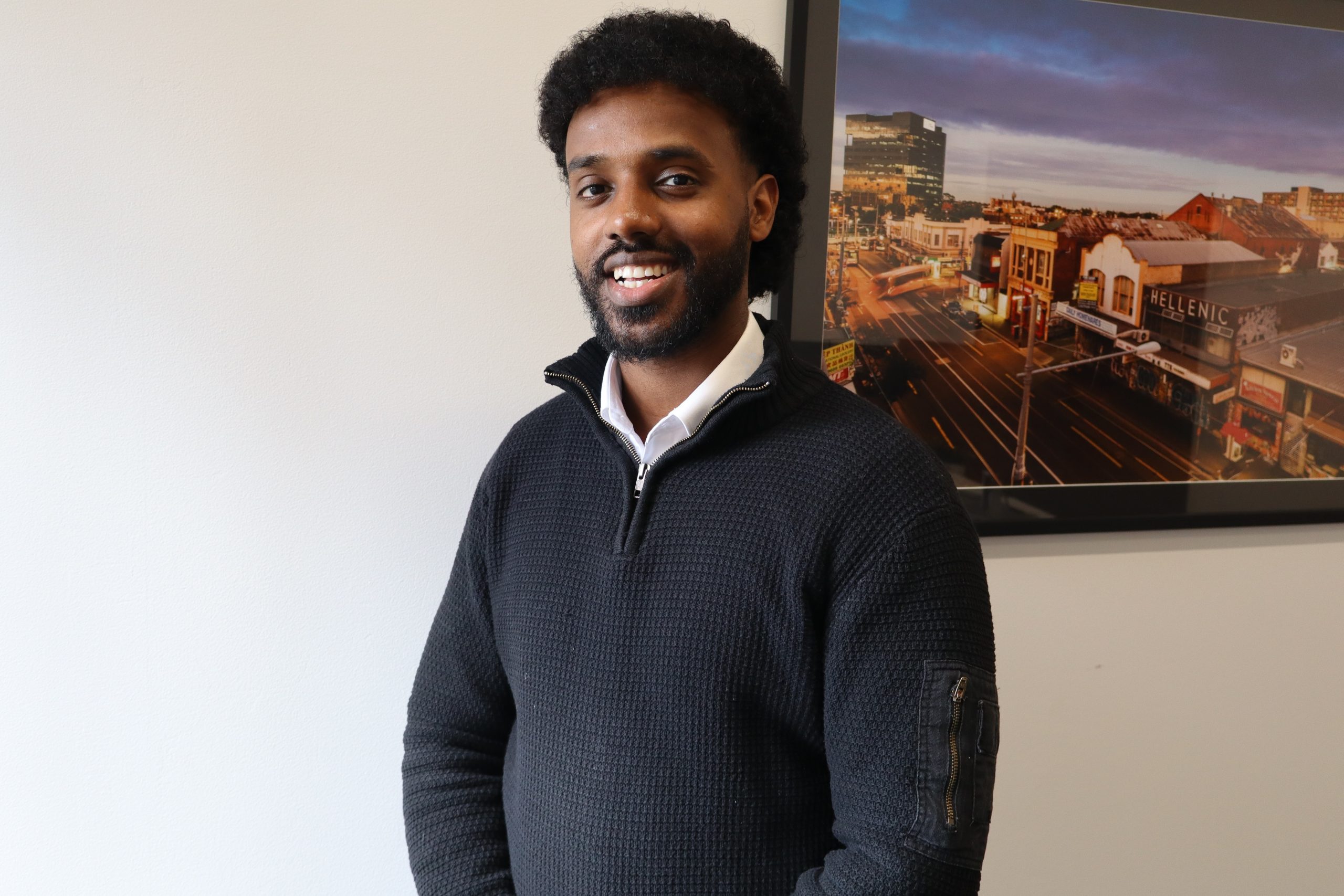
Councillor Semra is the first person of Sub-Saharan African descent to be elected mayor in Australia. He was also a nominee for Young Australian of the year and the co-founder of the community organisation Endeavour Youth Australia.
He says his journey as a refugee and growing up in working class Melbourne has shaped his work in social justice, human rights and inclusiveness.
That journey wasn’t easy, but it imbued in him a resilience and fierce passion for supporting the vulnerable in his community.
“I came to Australia from Sudan at three years old with my mum and five siblings,” Cr Semra said.
“Mum wanted a better life for her children in a new country that was full of potential for us to succeed.
“At the time, there was a civil conflict happening in Sudan that made it unsafe for us. My dad was falsely imprisoned because of the conflict.”
Cr Semra’s father was a member of the Beja Congress, a network of minority ethnic groups seeking representation and access to education and healthcare, which came into conflict with the Sudanese central government.
“Mum didn’t know where dad was, so she thought it was safest for bring us to Australia as refugees,” Cr Semra said.
“She arrived not understanding how to navigate a new system in a new country. And at the time there was not Sudanese community we haver now to wrap their arms around her.
“Mum showed tremendous leadership, courage and dedication to put food on the table. And we were supported by some amazing neighbours.
“There was so much kindness showed by our neighbours. I remember one neighbour had a lemon tree in her backyard and she would give us lemons on the weekends.
“Mum took this kindness as a message that we belonged here.
“And she showed me what true leadership looks like. You don’t need to know what all the outcomes will be to just go for it in trying to achieve positive change. If you are positive and committed things have a way of working themselves out.”
Cr Semra said his childhood was challenging but he benefitted from support from neighbours and his schools.
“Growing up in Melbourne was a difficult time for me. There was a sense I was different. When I looked at the other kids at school, they had newer shoes than me, they had the latest game consols and their lunch looked different from mine,” he said.
“Early on I realised my situation was different to others in terms of what we had. One of the kids in my class lived in the biggest house I had ever seen, and his parents drove a BMW whereas we didn’t even have a car.
“But at some time, I remember coming to the realisation that coming here as refugees meant that our situation was what it was.
“And coming as refugees was humbling. We felt strong gratitude to the government and Australian people.
“But in some ways, my mum was too trusting of the system. She had the attitude that ‘I’m not complaining about anything, I’m grateful to be here.
“She maybe naively assumed that everyone had her kids’ best interests at heart.”
Cr Semra says racism has been an abiding part of his life both as a victim and as campaigner to stamp it out.
“We were the targets of racism, but my mum had no understanding of racism. When you have come from a war-torn country your problem threshold is much higher.
“I could see I was visibly different because of my skin colour and people had preconceived ideas about my behaviour, intentions and intelligence.
“There was a lot of racism from other students. It was not malicious, but it made you feel othered.
“We saw racism across primary and high school. And when we walked into stores, we would be followed by security and if we were out with friends, we would be stopped by the police and randomly questioned.”
These experiences led to Cr Semra becoming a human rights and community advocate.
In 2015, when he and five of his African Australian friends were stopped from entering an Apple store in Melbourne because they might ‘steal something’, he decided he needed to do something.
Cr Semra went on to co-found the Endeavour Youth Australia to help culturally and linguistically diverse students feel empowered. Since then, the organisation has delivered hundreds of hours of workshops.
But Cr Semra says ultimately his family were fortunate to have come to Australia and received “enormous support”.
“At the same time. There was so much support around my family. At school we had breakfast club, which was so important because at times we didn’t have breakfast.
“And it is sad that we are seeing food insecurity on the rise again today.
“Also, I grew up in public housing and this was the most important aspect of my childhood because it gave us stability and a secure place to live. It meant my mum had one less thing to worry about,” Cr Semra said.
He said he and his siblings were also supported by a colleague of their mother who became like an aunt.
“Michelle was a former colleague of mum’s who did a lot for us. She had a house on the Great Ocean Road, and she would take us there for holidays with her two dogs.
“Our first trips to the zoo, the aquarium and parks were with Michelle. It’s hard to go past Michelle and my teachers in acknowledging the people who helped me get to where I am”.
But Cr Semra’s advocacy and public life was almost derailed by a debilitating stutter he acquired as a young child.
“I suffered from a stutter from when I was very young until I was 15,” he said.
“I wanted to be involved in issues and to contribute but not being able to articulate what I was thinking was difficult and it meant I got bullied and I got into trouble.
“But I was the beneficiary of speech therapy. I went to all day to sessions at La Trobe University over a week and it helped a lot. They identified my stutter came from pronouncing vowels and they taught me slow speech techniques that really helped.”
Cr Semra went on to be captain of the debating team at his school as well as school captain.
“Now, public speaking is a big part of my life,” he said.
Advocacy work and social justice has always been central theme in Cr Semra’s life.
“I always had a strong sense of justice which came from my own lived experience and knowing what my family went through in Sudan.
“I’m passionate about youth engagement and supporting young people on to positive pathways. There are many young people in our community who feel like they don’t belong.
“We need to help kids find internal motivation and confidence within themselves.”
Cr Semra tells a seminal story about his first trip back to Sudan that speak to the resilience he has developed over the years.
“The first time I went back to Sudan in 2007 was pivotal in my life journey,” he said.
Cr Semra stayed for three months with as uncle in his father’s village in eastern Sudan; a small community of huts with no phones, flushing toilets or running water.
“One day my uncle told me to take his donkey and fetch water from a well that was two hours away. I was only eight or nine years old, but he told me the donkey would know the way. He said there was one rule – that I should not jump off the donkey because it will become spooked and spill the water.
“So, I strapped four barrels to the donkey and set off on the two-hour trip through the desert. A lot of people along the way knew my uncle’s donkey, so we had no problems.
“But four hours later as I was approaching the village, I realised there was a tree with sharp spikes ahead of me. There was only enough room for the donkey to pass through, so I was faced with a split-second decision; jump off and risk spilling the water or stay on and risk being cut by the spikes.
“I decided to stay on go through the tree. I pushed myself as close to the donkey as I could, but I got deep scratches on the side of my face.
“The experience taught me a lot about what local sacrifice looks like – but also about how much there is to be grateful about in Australia.
“I now realise my success has been underpinned by resilience built over many years.”
Cr Semras says his own personal journey is informing his work in helping to bolster social cohesion.
“There is so much that is out of control. There are some harmful narratives, some of them racist, being amplified on social media and manipulated by bad actors who are causing interpersonal discord and a societal crisis,” he said.
“This is affecting social cohesion. We can have robust democratic debate about government policy and immigration without questioning our neighbours or blaming them.
“No institution, no individual and no government has the right to define what it means to be Australian.
“Australia continues to be shaped by the stories and experiences of people who call it home. It is also shaped by our civic values – things like democracy, freedom, equity and the rule of law.”
Cr Semra says local government is well placed to have an impact on social cohesion.
“The national debates are having a local impact and harmful narratives are being spread by social media and AI,” he said.
“But we in local government know our communities and can pick up on things early and combat bad narratives.”
Cr Semra says he is unsure about his future in politics. He says he is an independent with no party affiliation.
“It you had asked me at 15 or 20-years old that I would run for council, I would have laughed,” he said.
“But you never see politics until it turns up on your door. And it did for me during COVID with the housing tower lockdowns.”
During the COVID lockdowns, housing commission towers in Flemington – home to many African families – were severely locked down, sparking criticism and controversy.
“It was a catalyst for me to realise the only way to get outcomes that will take modern day Australia to where it needs to be, is to have people at the decision-making table who reflect the entire community.
“So, I decided to run for local government because all politics is local.
“But I’m doing this to make a difference in people’s lives not to get re-elected.”
Cr Semra says he is passionate about his community in Maribrynong and about securing its future.
“I have lived in my community for more than 20 years and it has evolved as it has grown. And it will grow by 50,000 people over the next 20 years. I want Maribrynong to remain liveable, sustainable and inclusive,” he said.
“Maribrynong needs to be affordable for migrants and young people, so I want to ensure we plan for the future, uplift voices – I’m always asking who is not in the room when we are making decisions. I also want Footscray to be the creative capital of Melbourne’s west.
“The City of Maribrynong already punches above its weight. We are not a social service, but we have 50 services provided to people at different stages of life.”
Another priority for Cr Semra is combatting racism and Maribrynong City Council has implemented an antiracism project.
“We surveyed members of our diverse communities and found that 80 per cent have experienced racism, and 60 per cent in the past six months but only 26 reported it,” he said.
The project has six key action items. They are: embedding anti-racism principles across Council, building community understanding, strengthening partnerships and improving reporting, support and accountability.
One more priority is making government more accessible.
“I believe in robust debate. We can only become better if more people have a say,” Cr Semra said.