

 Loading tweets...


Refugee Week 2026 – Syrian, Iraqi refugees happy and settling well, survey finds
Syrian and Iraqi refugees who came to Australia as a result of the conflict in their homelands are overwhelmingly happy with their lives, feeling safe and optimistic about the future and have become citizens, according to a new survey.
They are also feeling welcome and their children are doing well, according to the survey, commissioned to mark ten years since the bulk of the Syrians and Iraqis arrived.
But some families and individuals are still struggling with the cost-of-living issues, securing affordable housing and finding jobs that are commensurate with their experience and qualifications.
The survey, commissioned by migrant and refugee settlement agency AMES Australia, found that 67 per cent of respondents said their lives in Australia were either ‘good’ or ‘very good’. Another 16 per cent said their lives were ‘fair’.
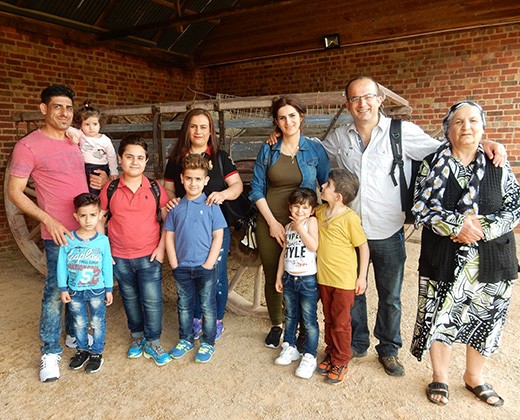 Ninety-seven per cent of respondents said they felt ‘very safe’ or ‘safe’ in Australia and 75 per cent said they were optimistic about the future.
Asked how their children were faring, 62 per cent said ‘very well’ and 35 per cent said ‘fairly well’.
Eighty-six per cent of respondents said they felty ‘very welcome’ in Australia and another ten per cent said they felt ‘somewhat welcome’ with 86 per cent saying they found it easy to talk to their neighbours.
Seventy-eight per cent of respondents said they had become citizens over the past decade with many others intending to become citizens.
Asked about employment outcomes, 91 per cent of those looking for work had found a job but 25 per cent said it was not commensurate with their skills and experience. Thirty-two per cent of respondents said their jobs were commensurate with their skills and anther 43 per cent were ‘mostly’ commensurate.
Ninety per cent of survey respondents said they had a ‘strong’ sense of belonging in Australia and 79 per cent had achieved a high ‘level’ of English.
Safety and security, employment and educational opportunities and healthcare were cited as the best things abut living in Australia while cost-of-living, being apart from family and isolation were cited as the worst.
Asked about their biggest challenges or barriers to settling in Australia, 30 per cent cited ‘finding fulfilling work’, 28 per cent said ‘housing’ and 25 per cent cited ‘cost-of-living’.
Asked about their ‘goals for the future’, the most common responses were ‘family reunion (35 per cent), ‘finding a better job’ (30 per cent), ‘starting a business’ (21 per cent) and ‘owning a home (14 per cent).
Just eleven per cent of respondents said they had a victim of racism or discrimination.
Asked whether they were optimistic about the future of their homelands, only 16 per cent answered ‘yes’, 36 per cent were unsure and 48 per cent were not optimistic. Just 12 per cent said they would consider returning to live in their homeland.
AMES Australia CEO Melinda Collinson said the survey showed the strength and capacity of Australia’s humanitarian settlement system as well as the resilience and of the Syrian and Iraqi communities in Australia.
“The positive outcomes described in the survey are no accident. They are result of a sophisticated, flexible and well-resourced settlement program and also the work of these communities to support each other,” Ms Collinson said.
“The program allows the needs, barriers and aspirations of individual refugees to be addressed. This means we can work with refugees to build on the strengths and resilience they bring with them to support them to achieve their goals.
“This benefits individuals and families, as well as Australia’s economy and society generally,” she said.
Syrian refugee Jamila Alarkan has carved out a career as a senior engineer working on renewable energy projects since arriving in Australia.
“After ten years, I feel a deep sense of gratitude — for safety, for opportunity, and for the life I’ve been able to build here. It hasn’t been simple, but it has shown me that with support, purpose, and determination, starting again can lead to something truly meaningful. I hope that one day my children will be proud to share this story — not just as a personal journey, but as part of a legacy that carries across generations of Australians, showing what can be built through resilience, opportunity, and giving back,” Jamila said.
“I’m proud to be Australian-Syrian. I’m grateful for the opportunity Australia has given me, and I’m equally proud of the Syrian community here. So many people have rebuilt their lives from scratch, working hard, contributing, and doing their best to give back to society. I deeply respect them and feel honoured to be part of this community. Being able to call ourselves Syrian Australians is something I will always carry with pride,” she said.
Iraqi doctor Asseel Yako, who fled his home when the militant group ISIS attacked and has since resumed his medical career in Australia says he bulk bills all of his patients as a way of giving back.
“I see this as a small way of giving back to the community and to Australian society for giving my family refuge after we were forced to flee Iraq,” he said.
Syrian refugee Norma Medawar, who arrived in Australia a decade ago fleeing the civil war in her homeland, said she now felt Australia was her home.
“We have a great life in Australia now. We are safe, we have jobs and homes and our children can have bright futures,” said Norma, who recently became a citizen.
“While Syria will always be in my heart, Australia is now my home,” she said.
The survey noted that among the key characteristics of the Syrian conflict intake were that most were Christians.
In terms of education, 47 per cent of Iraqi refugee adults and 42 per cent of Syrians had prior tertiary education qualifications.