



 Loading tweets...


Tuvaluan couple begin new life in Australia
A Tuvaluan couple have taken their first steps towards building a new life in Australia just days after arriving in Melbourne under the Falepili Mobility Pathway Program.
Tevesi Saila who arrived in Melbourne in January under the Falepili Mobility Pathway Program (FMPP) has already found employment.
Tevesi and his wife Lokoitevai are among the first arrivals supported through the FMPP, which offers visas to Tuvaluans, whose home is struggling with climate-driven sea inundation.
Under the program, the couple have the support a case manager from migrant settlement agency AMES Australia.
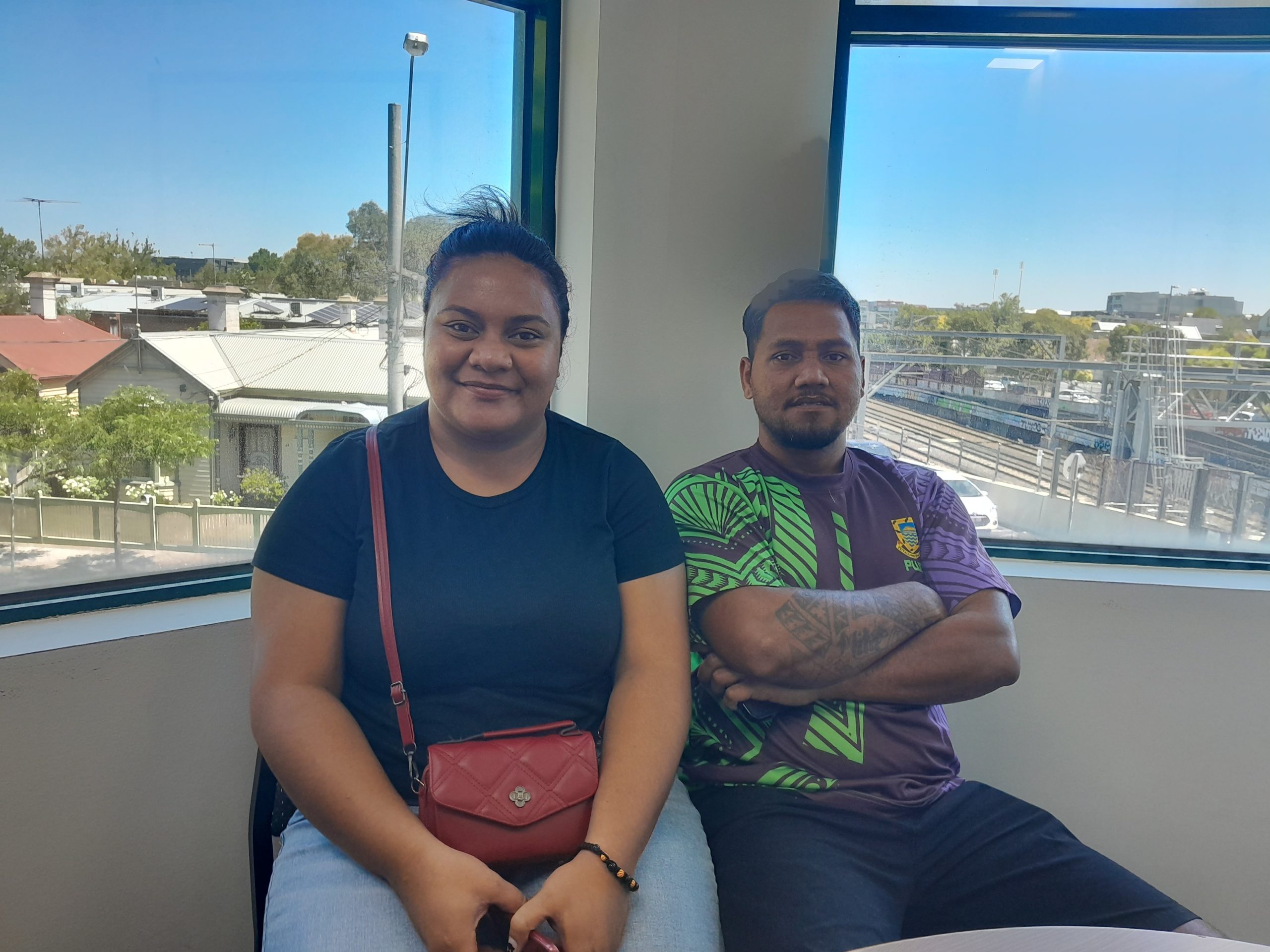 Tevesi’s speedy employment outcome was thanks to support from their case manager, Lakshmi Yanamadala, and local employer connections.
The young couple have limited income and resources. As newly arrived participants in the FMPP program, they received intensive settlement and employment support through the case management process.
During conversations about suitable roles, Tevesi identified his background in electrical and mechanical work, including experience as an electrician.
Lakshmi contacted a local employer she knows who had an opportunity in a plastic manufacturing company. The employer has initially placed Tevesi in a warehouse role while training him to operate different machines, with the intention that he will progress to a machine operator position.
Tevesi holds a driver’s licence and is currently using a cousin’s car to travel to work, which is about a 45-minute drive.
The couple have no children and are currently dependent on Tevesi’s income, as they are not eligible for other Centrelink payments on their visa. They are staying with a local host who has offered accommodation while they save for their own longer-term accommodation.
Tevesi is already receiving shifts, starting with three per week and with the prospect of more. He had no prior Australian work experience but was enthusiastic and grateful for the rapid outcome.
“I didn’t think I could get an opportunity so quickly. This is great for me and my wife,” he said.
Lokoitevai plans to study health administration or complete a Certificate III in pathology.
AMES is assisting her with enrolment and is supporting her training pathway.
“This gives me a lot of job satisfaction to place a client in work they actually wanted. It’s wonderful to see the client achieve their settlement goals. Employment is a key which will open up opportunities for him to buy a car, fund training for his wife, and secure long-term accommodation,” Lakshmi said.
AMES Australia CEO Melinda Collinson said the Falepili Mobility Pathway Program is designed to support newly arrived Tuvaluans as they settle, connect and build independence.
“Seeing those outcomes so quickly is incredibly rewarding. Securing paid work not only provides immediate financial stability, it accelerates language practice, local skills development and community connection,” Ms Collinson said.
“Programs like FMPP, combined with employer partnerships and hands‑on case management, make the difference between surviving and thriving in a new country. We’re proud to support Tevesi and his wife as they take these first steps toward long‑term stability and independence in Australia,” she said.
The FMPP supports newly arrived Tuvaluans with settlement services, employment assistance, and connections to local employers to help participants establish financial independence and long-term stability in Australia.
Australia’s offer of climate change relief to the Pacific atoll nation of Tuvalu, delivered in 2023, has been hailed as “ground-breaking” by experts and a signpost for future similar deals.
Residents of the low-lying Pacific Island nation now have a ‘special mobility pathway’ to permanent residency and citizenship in Australia, under the terms of the Australia-Tuvalu Falepili Union.
The bilateral pact announced at the Pacific Islands Forum in Cook Islands gives Tuvalu, a nation of 11,200 people, an exit strategy if the island succumbs to climate change induced rising sea levels.
The pact opens the way for an initial 280 people per year to resettle in Australia with rights to live, work and study.
It also provides Australia veto power over Tuvalu’s security arrangements with any other country.
Australia will also fund land reclamation and also assist Tuvalu if it faces natural disasters, pandemics and military aggression.