

 Loading tweets...


Ukrainians resolute four years after the invasion
Ukrainian Australians remain resolute in support of their homeland as this month marks four years since Russia’s invasion.
Melbourne-based Ukrainian community leader Maru Jarockyj said Australian Ukrainian communities were continuing to support the Ukrainian war effort.
“After four years there is obviously a sense of fatigue but on the flip side, there is an incredible sense of resilience,” Ms Jarockyj said.
“Every Ukrainian community in Australia is fundraising to support the defence of Ukraine and we are sending medical equipment and other technology to help Ukrainians.
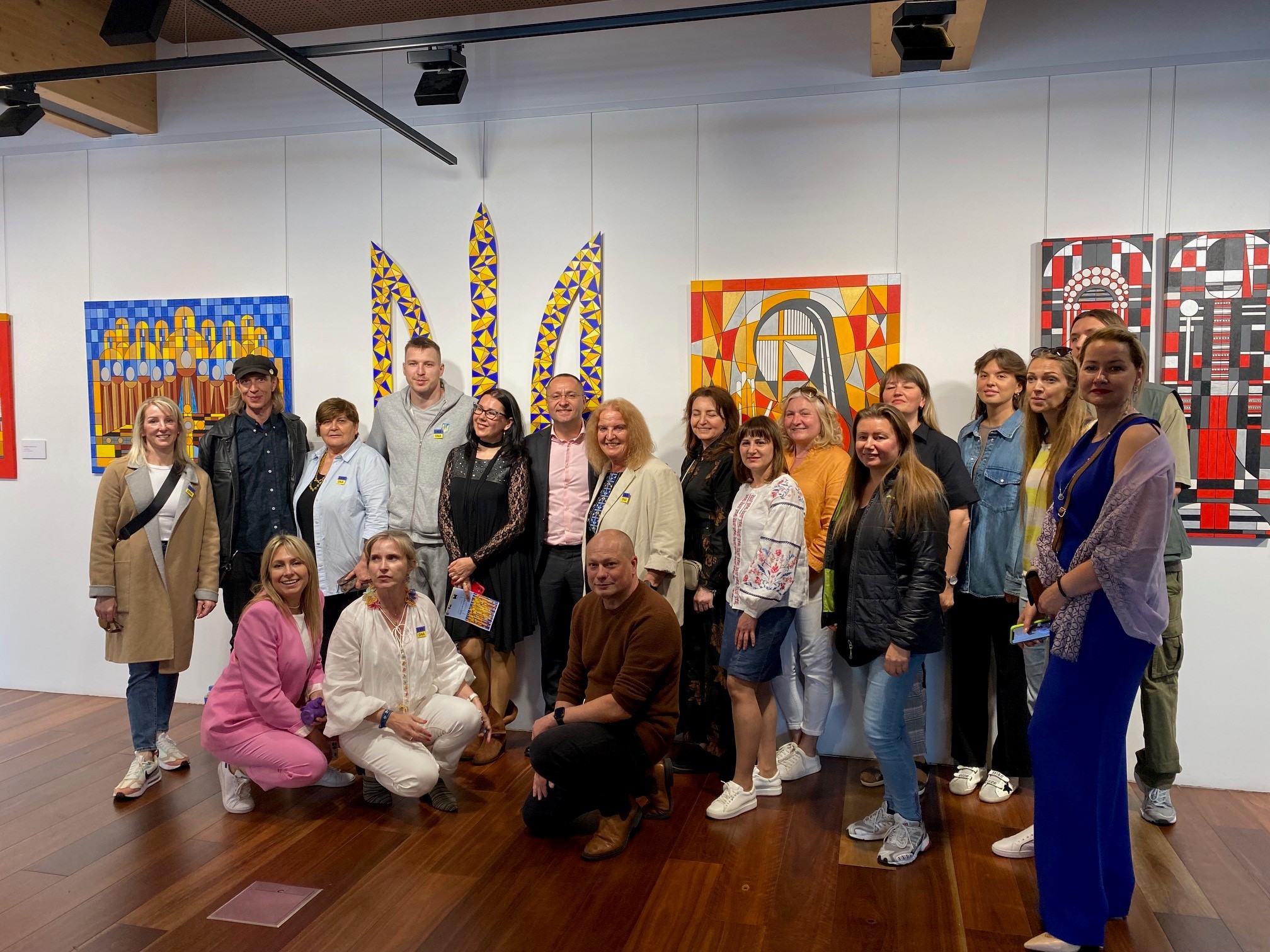 “There is also thinking and work being done around how we can help with the reconstruction of Ukraine,” she said.
Ms Jarockyj said Ukrainian spirits had been boosted by a growing realisation among European countries that Russia poses a threat to them.
“There is a growing realisation in Europe that Russia is a threat to everyone. We are hoping this is a turning point and that once the Russian people begin to suffer shortages of food and other necessities, there will be unrest.
“Ukrainians have been fighting for their homeland since the 11rth century and we will fight to the last Ukrainian,” Ms Jarockyj said.
Ukrainian refugee Yevheniia Cherkasova, who arrived in Australia with her younger sister shortly after the Russian invasion, said the four-year anniversary of the conflict had sparked homesickness.
“My family in Ukraine are doing well under the circumstances,” she said.
“But they are getting power outages regularly because of the Russian attacks.
“I miss them, and I wish they were here with me. But I know we will be reunited one day,” Ms Cherkasova said.
Ukrainian ambassador to Australia Vasyl Myroshnychenko has said the four-year mark in the conflict had brought a danger that publics and governments could become blasé.
“Despite horrible news of death and destruction, desensitisation can set in and concern about the war can be diminished. Or, other bad news – in fact, other wars in other places – can supplant the original one in our headlines and in our attention spans,” he said.
“Stories of Ukrainians spending winter in their flats without heat or light due to the Kremlin’s psychological bombing campaign register but can somehow seem “normal”.
“And this habituation to illegality, aggression and brutality is exactly what Vladimir Putin hopes for and calculates for.
“The more accustomed the world is to his despotic excesses, the more comfortable he becomes in committing them and the less he expects to face consequences for his malicious and imperialistic actions.
“…for the West to become blasé to the war on Ukraine enables and feeds the Kremlin’s key narratives that ‘Russian victory is inevitable’, that ‘Russia is a geopolitical superpower whose sphere of influence should be regarded’ and, consequentially, that ‘Ukraine needs to cede territory’.
“As we reflect on the fourth year of the war, it is good therefore that there is good news on the side of good. Firstly, Putin’s narratives are patently false. Secondly, the Australian public and Government know it and continue to proceed accordingly as strong allies of Ukraine,” Mr Myroshnychenko said.
He said that in the last 12 months, Russia, while sustaining hundreds of thousands of casualties, has only gained Ukrainian territory the size of Canberra and has this week lost 200 square kilometres.
“Meanwhile, Ukraine is producing 4.5 million drones per year, the most of any nation in the world, and has successfully decimated some 35 per cent of the oil processing that sustains the Russian mafia’s gas station economy.
“Indeed, Russian economic growth is at zero per cent and interest rates are about 20 per cent. Many analysts argue that Putin undertakes the terroristic bombing of Ukraine’s cities only because his efforts on the conventional battlefield have completely ground to a halt, even as his economy is threatening to do so.”
Mr Myroshnychenko said he was grateful the support of Australians, citing recent poll that shows that the vast majority of Australians still strongly support maintaining or increasing Australian aid for Ukraine.
Australian aid totals $US1.7 billion to date putting it in the top 20 international donors to Ukraine.
Half of this come in the form of the military vehicles, Abrams tanks Bushmaster armoured vehicles, that Ukraine very needs for its defence.
“I wish to assure Australians that, on this fourth anniversary, their Ukrainian compatriots, bound to them ever since the tragedy of MH17, are anything but blasé about the war. Even as record number of bombs fall on their homes, Ukrainians remain resolute in their determination for and dedication to victory,” Mr Myroshnychenko said.
Meanwhile, the UN refugee agency UNHCR says that amid the harshest winter in a decade, millions of displaced Ukrainians are confronting a growing crisis marked by freezing temperatures and ongoing attacks, with the prospect of peace remaining remote.
Inside Ukraine, repeated attacks on housing, energy systems and essential services throughout the winter left millions without heating or electricity for prolonged periods, UNHCR said in a recent report.
While temperatures are slowly rising, the damage remains. An estimated 10.8 million people inside the country need humanitarian assistance in 2026, and 3.7 million are internally displaced.
At the same time, 5.9 million Ukrainians remain refugees abroad. Across Europe, host countries have provided protection and opportunities at an unprecedented scale, giving refugees access to education, healthcare and employment. This has helped millions regain stability and contribute to host communities.
“As the war continues, however, more is needed to support refugees from a displacement crisis with no clear end. Alongside Temporary Protection, States should explore options for alternative arrangements for longer stays. These can bring stability for the most vulnerable in particular, for whom return may not be immediately possible even after the war,” UNHCR said.