
 Loading tweets...


World Cup stars inspiring young refugees
In the first week of the current tournament Nestory Irankunda became the youngest player to score for Australia at a World Cup.
He was one a record nine refugees taking part in this year’s tournament and one of three Australians.
Irankunda was born in a refugee camp in Kigoma, Tanzania, after his parents fled Burundi’s civil war.
Across the largest World Cup ever staged with 48 nations, hosted by Canada, Mexico and the United States, at least nine players carry a refugee or displacement story.
They were brought together before the tournament by the UN refugee agency UNHCR under a campaign called the ‘Gamechanging Team’.
The team is symbolic of global football players with a refugee or displacement background.
It embodies hope, courage, resilience and the power of what is possible when young people displaced by war and persecution find safety, opportunity and welcome, the UNHCR said.
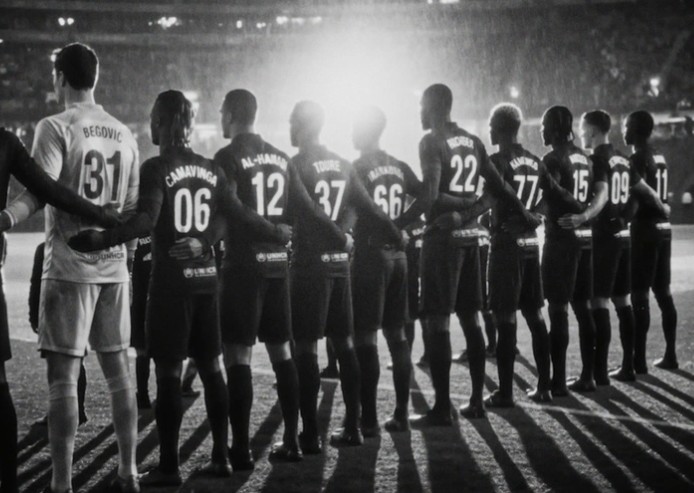
UN High Commissioner for Refugees, Barham Salih, called this World Cup “an ideal moment to send a message of hope to fans all over the world”.
Irankanda’s teammate Awer Mabil was born in Kakuma refugee camp, Kenya, after his South Sudanese parents fled civil war, and was resettled in Adelaide aged ten.
He scored the penalty that sent Australia to the 2022 World Cup and co-founded Barefoot to Boots, a charity supplying football gear to children still living in Kakuma.
“Everything is possible… so keep going,” he told a group of refugee children during Refugee Week in June 2026.
Mohamed Toure was born in a refugee camp in Conakry, Guinea, in 2004, after his family fled an attack on their hometown in Liberia and spent 14 years waiting to be resettled.
“Our town was attacked by a group of men and we had to flee,” his father, Amara, told Football Australia’s media channel recently.
The family settled in Adelaide and Toure told Football Australia: “If my dad can go to work and say: ‘Yeah, my son played at the World Cup’… that makes me happier than me playing in a World Cup”.
Canada’s Alphonso Davies was born in 2000 in Buduburam refugee camp, Ghana, after his parents fled Liberia’s civil war.
The family resettled in Edmonton, Canada, when he was five and in March 2021, he became the first footballer named a UNHCR Global Goodwill Ambassador.
“Whilst the refugee camp provided a safe place for my family when they fled war, I often wonder where I would have been if I had stayed there,” he said recently.
“I don’t think I would have made it to where I am today.”
Davies now captains Canada.
Ermedin Demirovic was born in Germany, where his father settled after fleeing Bosnia during the Balkan war. He chose to represent Bosnia and Herzegovina rather than Germany.
“To now represent Bosnia and Herzegovina at only its second-ever World Cup makes me incredibly proud,” he said in the statement released by UNHCR as part of its Gamechanging Team campaign.
Asmir Begovic fled Bosnia at four, first to Germany, then to Canada, where he learned the game.
He played at Bosnia’s first World Cup in 2014 and remains part of the squad for its second.
“I get flashbacks every once in a while travelling in the car,” he said in a 2022 interview.
“Nobody felt sorry for us, and you couldn’t feel sorry for yourself.”
Antonio Rudiger was born in Berlin to a mother who fled Sierra Leone’s civil war in 1991 and settled in Neukolln, a district he described in a 2020 interview as “a tough area where mostly refugees grew up.”
“My parents came to Germany from Sierra Leone to seek safety and a better future,” he said in the UNHCR Gamechanging statement.
“Representing Germany is a full circle moment for me.”
Ali Al-Hamadi was a baby when his family fled Iraq in 2003, spurred by the jailing of his father for joining a peaceful protest against Saddam Hussein.
Upon the release of his father, who was studying to be a lawyer at the time, the family fled to the United Kingdom.
Iraq qualified for its first World Cup in roughly four decades this year, and Al-Hamadi made the squad.
“It’s not just my father, it’s my mother,” he said in an interview. “For a young woman to carry me… and have to leave her home country… was really damaging.”
Eduardo Camavinga was born in a refugee camp in Angola after his parents fled war in DR Congo. Ahead of the 2022 Champions League final, he said, in a statement released through UNHCR: “I was born in a refugee camp in Angola after my family fled war… I’m grateful to play, and proud to do so, as a former refugee”. He plays for France.
The UNHCR says 117 million people are displaced worldwide, including almost 49 million children.
Read more about the ‘Gamechanging Team’: https://www.unhcr.org/news/press-releases/uprooted-unstoppable-unhcrs-gamechanging-team-captained-alphonso-davies